





Morning Routine for Longevity and Energy: 7 Science-Backed Habits

Introduction How you start your morning shapes how your body performs for the rest of the day. If you often feel tired, unfocused, or low on energy, your morning habits may be working against you — not with you. From a biological perspective, your body follows a circadian rhythm, which controls energy, hormones, and metabolism. When your routine aligns with this natural rhythm, you can experience: In this article, you’ll discover a morning routine for longevity and energy built on simple, science-supported habits.] 🧠 Why a Morning Routine for Longevity and Energy Matters Your body is most responsive in the morning. This is when: When you support this process, your energy becomes more stable throughout the day. On the other hand, poor habits can disrupt this balance. ⚠️ Signs that your morning routine is affecting your energy Warning signs: If this feels familiar, it’s time to adjust your routine. 🌞 1. Start Your Morning Routine for Energy with Hydration After hours of sleep, your body is naturally dehydrated. Drinking water helps: Start with a glass of water — simple, but powerful. ☀️ 2. Use Light Exposure in Your Morning Routine for Longevity Natural light is one of the most effective ways to regulate your circadian rhythm. It helps: Even 5–10 minutes can make a difference. 🧘♀️ 3. Add Movement to Your Morning Routine for Energy You don’t need an intense workout. Light movement helps: Try: 🧠 4. Practice Focus to Boost Energy Naturally Your brain is more receptive in the morning. Instead of checking your phone immediately, try: This reduces mental clutter and improves productivity. 🍽️ 5. Eat Smart to Support Your Morning Routine for Longevity Your first meal influences your energy. Focus on: Avoid high-sugar foods that lead to energy crashes. 👉 Learn more:https://vitalvibes.blog/foods-to-eat-during-intermittent-fasting/ 🌬️ 6. Use Breathing to Boost Energy and Calm the Mind Controlled breathing can: Even one minute of deep breathing can help regulate your nervous system. 📵 7. Protect Your Energy (Digital Boundaries) Checking your phone too early can overload your brain. To maintain a healthy morning routine: This helps you stay calm and intentional. 🔗 Related Articles Deepen your routine: 👉 https://vitalvibes.blog/7-morning-habits-that-boost-your-energy-naturally/👉 https://vitalvibes.blog/intermittent-fasting-for-beginners/👉 https://vitalvibes.blog/the-best-night-routine-for-a-stress-free-mind/ 🌿 Natural Support Options While routines are essential, some individuals explore additional ways to support energy and vitality. These may include: 👉 Explore natural energy support options 🌱 Final Thoughts A strong morning routine is not about doing everything perfectly. It’s about creating small habits that support your body’s natural rhythm. With consistency, these habits can help you: Start simple. Stay consistent. And let your mornings work for you. FAQ
10 Anti-Aging Foods for Longevity and Healthy Living

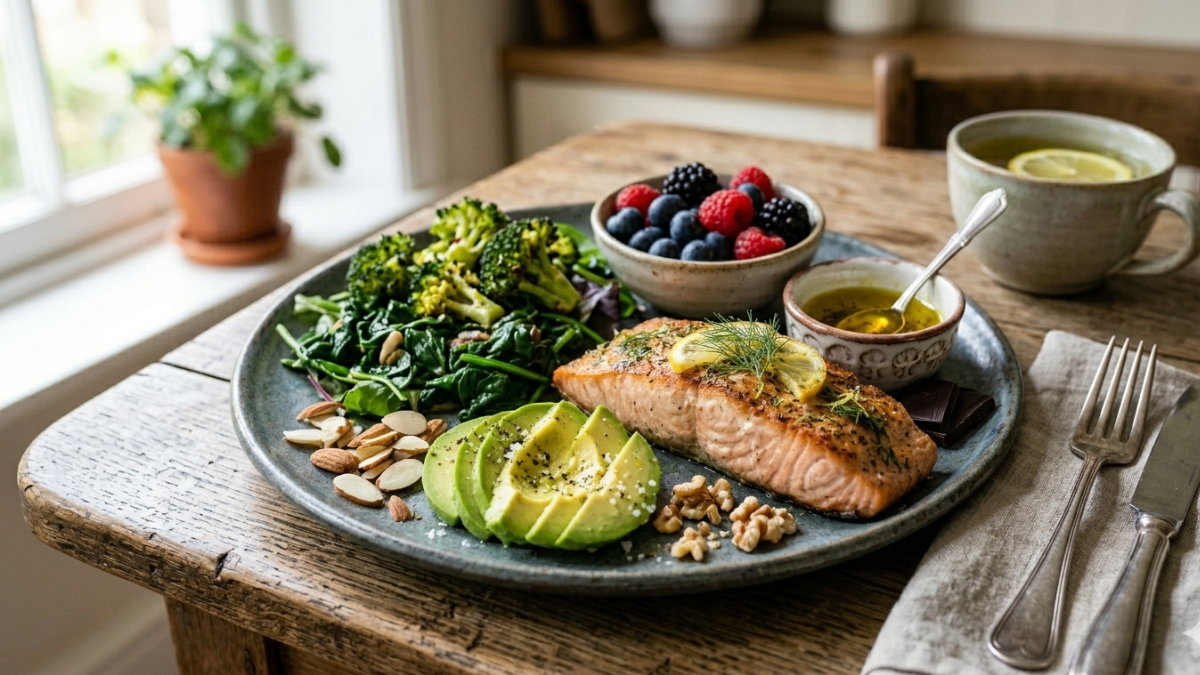
Introduction Aging is natural — but how we age can be influenced by daily choices. You may have noticed that some people maintain energy, clear skin, and vitality longer than others. One of the key factors behind this difference is nutrition. From a scientific perspective, aging is strongly linked to oxidative stress and inflammation, which affect how our cells function over time. The good news?Certain anti-aging foods may help support your body’s natural defense systems. In this article, you’ll discover 10 powerful foods for longevity and how to include them in your daily routine. 🧠 The Science Behind Anti-Aging Foods Before exploring the best anti-aging foods, it’s important to understand why they work. Aging is influenced by: Antioxidant-rich foods help: Research in nutrition science suggests that diets rich in whole, nutrient-dense foods are associated with better long-term health and longevity. ⚠️ Signs that your body may be under oxidative stress Warning signs: These signs may indicate the need to improve your diet quality. 🫐 1. Blueberries (Top Anti-Aging Foods for Longevity) Blueberries are among the most powerful antioxidant-rich foods. They contain: These compounds may help protect cells from oxidative damage. 🍵 2. Green Tea (Anti-Aging Foods That Reduce Inflammation) Green tea is rich in catechins, known for their anti-inflammatory properties. It may support: 👉 It also pairs well with fasting routines:https://vitalvibes.blog/intermittent-fasting-for-beginners/ 🌿 3. Turmeric (Powerful Anti-Aging Food for Cellular Health) Turmeric contains curcumin, a compound studied for its role in reducing inflammation. It may support: 🥑 4. Avocado (Healthy Fats for Anti-Aging Diet) Avocados provide: These nutrients help maintain skin elasticity and support cellular health 🥦 5. Leafy Greens (Essential Anti-Aging Foods) Vegetables like spinach and kale are rich in: They support detoxification and overall health. 🍫 6. Dark Chocolate (Surprising Anti-Aging Food) High-quality dark chocolate contains flavonoids. These may help: Choose chocolate with high cocoa content. 🐟 7. Fatty Fish (Omega-3 Anti-Aging Foods) Salmon and sardines provide omega-3 fatty acids. These support: 🥜 8. Nuts (Longevity Foods for Daily Nutrition) Nuts like almonds and walnuts contain: They are easy to include in daily meals. 🍓 9. Berries (Antioxidant-Rich Anti-Aging Foods) Strawberries and raspberries are rich in vitamin C and antioxidants. They help: 🍅 10. Tomatoes (Skin-Focused Anti-Aging Foods) Tomatoes contain lycopene, a compound associated with skin protection. They may help reduce damage from environmental stressors. 🔗 Related Articles To improve your nutrition strategy: 👉 https://vitalvibes.blog/foods-to-eat-during-intermittent-fasting/👉 https://vitalvibes.blog/cortisol-and-metabolism/ 🌿 How to Combine Anti-Aging Foods for Better Results Instead of focusing on one food, aim for balance. For example: Consistency matters more than perfection. 🌿 Natural Support Options While diet is the foundation, some individuals explore additional ways to support longevity. These may include: 👉 Explore natural anti-aging support options 🌱 Final Thoughts Aging is a natural process — but how you support your body makes a difference. By including more anti-aging foods in your routine, you can help your body: Small changes, done consistently, can lead to meaningful improvements over time. FAQ
7 Daily Habits to Reduce Anxiety Fast (Science-Backed Tips)

Introduction Some days, anxiety doesn’t wait. It shows up in your chest, your thoughts, your breathing — and suddenly, everything feels overwhelming. In those moments, what you need isn’t a complex plan.You need simple, effective ways to reduce anxiety fast. From a biological perspective, anxiety is a response from your nervous system — and the good news is:👉 you can influence that response with small daily habits. In this article, you’ll discover 7 simple habits that help calm the mind fast and support long-term emotional balance. ⚠️ Signs You Need to Reduce Anxiety Quickly Warning Signs: If this happens frequently, these habits can help you better manage these moments. 🌬️ 1. Use Breathing to Reduce Anxiety Fast One of the quickest ways to reduce anxiety fast is through controlled breathing. When you slow your breath, your nervous system shifts from stress mode to calm mode. Simple method: Repeat for 2–3 minutes. This technique is widely used in stress physiology to promote relaxation. 🚶♂️ 2. Move Your Body to Reduce Stress Quickly Physical movement helps reduce stress quickly by releasing built-up tension. You don’t need a full workout. Try: Even 5–10 minutes can help calm the mind fast. ☀️ 3. Get Natural Light to Calm the Mind Fast Exposure to natural light helps regulate your internal clock and reduce stress signals. It may also support serotonin production, which influences mood. Just a few minutes outside can help reset your mental state. 🧠 4. Do a “Mental Reset” to Reduce Anxiety Fast When your thoughts are overwhelming, writing them down can help. This is often called a brain dump. Write: This helps your brain feel more organized and less overloaded. 📵 5. Reduce Digital Overload (Calm the Mind Fast) Constant notifications and information overload can increase anxiety. To reduce stress quickly: Your brain needs quiet to recover. 🥗 6. Stabilize Your Energy to Reduce Anxiety Naturally Blood sugar fluctuations can affect mood and anxiety levels. To reduce anxiety naturally: 👉 Learn more: https://vitalvibes.blog/foods-to-eat-during-intermittent-fasting/ Stable energy often leads to a calmer mind. 🌙 7. Improve Sleep to Prevent Anxiety Sleep plays a major role in emotional regulation. Lack of sleep can increase stress hormones and make anxiety harder to manage. To improve sleep: 👉 Read more: https://vitalvibes.blog/the-best-night-routine-for-a-stress-free-mind/ 🔗 Related Articles For deeper understanding: 👉 https://vitalvibes.blog/reduce-anxiety-naturally/👉 https://vitalvibes.blog/cortisol-and-metabolism/ 🌿 Natural Support Options While daily habits are essential, some individuals explore natural ways to support relaxation and stress balance. These may include: 👉 Explore natural calming support options 🌱 Final Thoughts Learning to reduce anxiety fast is not about controlling everything. It’s about having simple tools that help you respond better in the moment. Small habits — done consistently — can shift how your mind and body react to stress. And over time, what once felt overwhelming becomes something you can manage with more ease. FAQ
How to Reduce Anxiety Naturally: Simple Techniques That Work

Introduction Your mind feels restless.Your thoughts don’t slow down.And even when everything seems fine, your body feels tense. If this sounds familiar, you’re not alone. Anxiety has become increasingly common in modern life — often driven by constant stimulation, stress, and lack of recovery. From a biological perspective, anxiety is closely linked to how your nervous system responds to stress signals. In this article, you’ll discover how to reduce anxiety naturally, using simple, science-supported techniques that help calm the mind and restore balance. 🧠 What Causes Anxiety? (Understanding Before You Reduce Anxiety) Before trying to reduce anxiety, it’s important to understand what’s happening inside your body. Anxiety is often linked to: According to the National Institute of Mental Health, anxiety disorders involve persistent activation of stress responses, even without immediate danger. In simple terms:👉 your body stays in “alert mode” longer than necessary ⚠️ Signs that you need to reduce anxiety Warning signs: Recognizing these signs is the first step to managing anxiety naturally. 🌿 How to Reduce Anxiety Naturally with Breathing Techniques One of the fastest ways to reduce anxiety is through controlled breathing. When you slow your breath, you send a signal to your nervous system that it is safe to relax. Simple breathing method: Repeat for 2–3 minutes. Research in physiology shows that slow breathing can activate the parasympathetic nervous system, helping calm the mind 🧘♀️ Reduce Anxiety Naturally Through Mindfulness and Awareness Mindfulness helps reduce anxiety by bringing your attention back to the present moment. Instead of worrying about the future, you train your mind to observe without reacting. You can start with: 👉 Read more here: https://vitalvibes.blog/mindfulness-techniques-for-beginners/ This practice has been widely studied in mental health research, showing benefits in reducing stress and emotional reactivity. 🌙 How Sleep Helps Reduce Anxiety Naturally Sleep and anxiety are deeply connected. Poor sleep can increase stress hormones and make it harder to regulate emotions. To improve sleep quality: 👉 Learn more: https://vitalvibes.blog/the-best-night-routine-for-a-stress-free-mind/ Better sleep often leads to better emotional balance. 🥗 Nutrition and How It Helps Reduce Stress Naturally What you eat directly affects your brain and nervous system. To reduce stress naturally, focus on: According to Harvard Medical School, nutrition plays a key role in mood regulation and brain health. 🌿 Natural Supplements That May Help Reduce Anxiety Some natural compounds are often used to support relaxation. These include: These options are often used as complementary approaches to help manage anxiety naturally. 👉 Explore natural calming support options 🔗 Related Articles Improve your overall mental balance: 👉 https://vitalvibes.blog/cortisol-and-metabolism/👉 https://vitalvibes.blog/intermittent-fasting-for-beginners/ ⚡ Daily Habits to Reduce Anxiety Naturally Small daily habits can have a powerful effect. Try: These habits help regulate your nervous system over time. 🌱 Final Thoughts Learning how to reduce anxiety naturally is not about eliminating stress completely. It’s about helping your body respond in a more balanced way. With consistent habits — like breathing, sleep, nutrition, and mindfulness — your mind can become calmer and more stable. And over time, what once felt overwhelming can begin to feel manageable again. FAQ
Keto Diet 2026: What to Eat, Benefits & How to Start

Introduction You’ve probably heard about the keto diet — a low-carb approach that promises fat loss, better energy, and improved metabolic health. But for many beginners, it can feel confusing.What do you actually eat?Why does it work?And why do some people feel amazing… while others struggle at first? The answer lies in how your body uses energy. When carbohydrates are reduced, your body shifts into a different metabolic state — one that relies more on fat instead of sugar. In this article, you’ll discover how the ketogenic diet works, what to eat, and how to start in a balanced, sustainable way. 🧠 What Is the Keto Diet? The ketogenic diet is a low-carbohydrate, high-fat eating approach designed to shift the body into a state called ketosis. In ketosis, your body: Instead of relying on quick sugar energy, your body uses a more stable fuel source. 🔬 The Science Behind Ketosis Normally, your body uses carbohydrates for energy. When carb intake is reduced significantly: These ketones become an alternative energy source for the brain and body. Research in metabolic health suggests that ketogenic diets may support: ⚠️ Signs Your Body Is Entering Ketosis Positive warning signs: These signs indicate metabolic adaptation. 🥑 What to Eat on a Keto Diet The success of keto depends heavily on food choices. 🥩 Healthy Fats (Main Energy Source) 🍗 Protein (Moderate Intake) 🥦 Low-Carb Vegetables 🥜 Nuts and Seeds 🚫 Foods to Avoid ⚡ The Keto Adaptation Phase (Keto Flu) In the first days, your body transitions from sugar to fat burning. This may cause: This phase is commonly known as “keto flu.” 💡 How to Reduce Keto Flu This phase is temporary and usually improves within a few days. 🔗 Related Articles To enhance your results, combine keto with structured eating: 👉 https://vitalvibes.blog/intermittent-fasting-for-beginners/ And optimize your food choices here: 👉 https://vitalvibes.blog/foods-to-eat-during-intermittent-fasting/ ⚡ Benefits of the Keto Diet 1. Supports Fat Loss Reduced insulin may help the body access stored fat. 2. More Stable Energy Less dependence on sugar = fewer energy crashes. 3. Appetite Control High-fat meals can increase satiety. 4. May Support Blood Sugar Balance Often used as a complementary strategy for glucose control. 5. Mental Clarity Some people report improved focus during ketosis. 🌿 Natural Support Options While keto can be effective, some individuals find it challenging to maintain energy and consistency — especially during the adaptation phase. In these cases, some explore natural support options such as: 👉 Explore keto support options and easy recipes 🧠 Common Mistakes to Avoid Keto works best when approached gradually and sustainably. 🌱 Final Thoughts The ketogenic diet is not just about cutting carbs — it’s about changing how your body produces energy. When done correctly, it can support: The key is not perfection — but consistency. Start simple. Adjust gradually. And let your body adapt at its own pace. FAQ
Cortisol and Metabolism: How to Balance Stress Naturally

Introduction You wake up tired.You feel stressed even when nothing seems wrong.And no matter what you try, your energy and metabolism just don’t feel right. This is more common than you think — and often, the hidden factor is cortisol, your body’s main stress hormone. Cortisol plays a vital role in energy regulation, but when it stays elevated for too long, it can disrupt metabolism, increase fat storage, and affect how your body uses energy. In this article, you’ll discover how cortisol affects your metabolism and how to support balance in a natural, sustainable way. 🧠 What Is Cortisol and Why It Matters Cortisol is a hormone produced by the adrenal glands in response to stress. It helps your body: In short bursts, cortisol is helpful. But when stress becomes constant, cortisol can remain elevated — and that’s where problems begin. 🔬 The Biological Link Between Cortisol and Metabolism When cortisol levels stay high for extended periods, several metabolic changes may occur. Here’s what happens inside the body: Studies in stress physiology suggest that chronic cortisol elevation may contribute to metabolic imbalance and fatigue. Think of cortisol like a “survival switch.”When it stays on too long, your body prioritizes storage over burning energy. ⚠️ Signs that your cortisol may be elevated Warning signs: If you recognize several of these signs, it may indicate an imbalance. ⚡ How High Cortisol Affects Your Energy Cortisol doesn’t just impact fat storage — it directly affects how you feel daily. When unbalanced, it may lead to: This creates a cycle: 👉 stress → cortisol → poor sleep → more stress Breaking this cycle is essential for restoring energy. 🌿 Natural Ways to Support Cortisol Balance Balancing cortisol is not about eliminating stress — it’s about helping your body respond better to it. 🧘♀️ 1. Support Your Nervous System Simple practices like: can help reduce stress signals in the body. 🌙 2. Improve Sleep Quality Sleep is one of the strongest regulators of cortisol. Focus on: ☀️ 3. Get Morning Light Exposure Natural light helps regulate your circadian rhythm and supports healthy cortisol patterns. Just 5–10 minutes in the morning can make a difference. 🥗 4. Eat for Stability Balanced meals with: help stabilize blood sugar and reduce stress responses. 🏃♂️ 5. Avoid Excessive High-Intensity Stress While exercise is beneficial, too much intense training may increase cortisol. Balance is key. 🔗 Related Reading To understand how nutrition impacts metabolism, read: 👉 https://vitalvibes.blog/foods-to-eat-during-intermittent-fasting/ And if you’re exploring structured eating patterns: 👉 https://vitalvibes.blog/intermittent-fasting-for-beginners/ 🌿 Natural Support Options While lifestyle adjustments are essential, some individuals explore natural support strategies to help regulate stress response and metabolic balance. These approaches are often designed to support: 👉 Learn more about natural support approaches 🌱 Final Thoughts Cortisol is not the enemy — it’s a powerful tool your body uses to protect you. But like many things in health, balance is everything. By supporting your sleep, nutrition, and stress response, you can help your body return to a more stable rhythm — one where energy feels natural again. Small changes, applied consistently, can create lasting results. How to Promote Cortisol Balance Naturally? FAQ
Best Foods to Eat During Intermittent Fasting (Beginner-Friendly Guide)

Introduction Intermittent fasting is not just about when you eat — it’s also about what you eat. Many beginners focus only on the fasting window and ignore one critical factor:👉 food quality during the eating window And that’s where most people go wrong. Because here’s the truth:you can fast for 16 hours… and still not get results if your meals don’t support your metabolism. If you’re new to fasting, start here first: 👉 https://vitalvibes.blog/intermittent-fasting-for-beginners/ Now let’s build the second half of the equation — the foods that actually make fasting work. 🧠 Why Food Choices Matter During Intermittent Fasting During fasting, your body shifts from using sugar to using stored fat for energy. But when you eat again, your choices determine: Research shows that intermittent fasting can improve metabolic markers like blood sugar and inflammation — but diet quality still plays a major role In simple terms:👉 fasting opens the door👉 food determines the results 🥑 Best Foods to Eat During Intermittent Fasting To maximize results, your meals should focus on balance and stability, not extremes. 🥩 1. Lean Proteins (Build & Repair) Protein helps: Best options: 🥦 2. Fiber-Rich Vegetables (Control Hunger) Vegetables are essential for: Top choices: 🥑 3. Healthy Fats (Sustained Energy) Healthy fats provide slow, stable energy, which is ideal for fasting lifestyles. Best sources: 🍚 4. Complex Carbohydrates (Smart Fuel) Carbs are not the enemy — the type matters. Choose: These release energy slowly and prevent crashes. 🍓 5. Low-Sugar Fruits (Natural Support) Fruits provide: Best options: Avoid excessive high-sugar fruits if your goal is fat loss. 🚫 Foods to Avoid During Intermittent Fasting Even if you’re fasting correctly, these foods can reduce results: These cause: ⚡ What to Drink During Fasting During your fasting window, stick to: These help maintain hydration without breaking the fast. Experts confirm that zero-calorie beverages are generally acceptable during fasting periods 🔍 Signs Your Diet Is Supporting Your Fast If you’re not experiencing these, your food choices may need adjustment. 🌿 Natural Support Options Even with a clean diet, some people struggle with: In these cases, some individuals explore natural metabolic support options designed to complement fasting routines and improve energy balance. 👉 Explore natural support options here 🧠 Pro Tips for Better Results 🌱 Final Thoughts Intermittent fasting is powerful — but it’s only half the equation. The real results come from combining: When you align both, your body becomes more efficient, balanced, and energized. And that’s when fasting stops feeling like effort…and starts feeling natural.
Intermittent Fasting for Beginners: Benefits and How to Start

✨ Introduction You’ve probably heard about intermittent fasting — from social media, friends, or even wellness experts. Some people say it helps with weight loss.Others claim it improves energy, focus, and even longevity. But here’s the truth:intermittent fasting isn’t a magic trick — it’s a structured eating pattern that works with your body’s natural rhythms. And when done correctly, it can become one of the simplest ways to support your metabolism and overall well-being. In this beginner-friendly guide, you’ll learn how it works, what science says, and how to start safely. 🧠 What Is Intermittent Fasting? Intermittent fasting (IF) is not a diet — it’s a timing strategy. Instead of focusing on what you eat, it focuses on when you eat. The most common method is: 16:8 Method Example: This gives your body time to switch from digesting food to burning stored energy. 🔬 How Intermittent Fasting Works (Simple Science) When you eat, your body uses glucose (sugar) for energy. When you fast, insulin levels drop, and your body begins to: This metabolic shift is often called: 👉 “fat-burning mode” Research in metabolic health shows that fasting periods may support: ⚡ Benefits of Intermittent Fasting 1. Supports Natural Weight Management Fasting can help reduce overall calorie intake and improve fat utilization. 2. May Improve Energy Stability Many people report fewer energy crashes during the day. 3. Supports Metabolic Health Better insulin control = better energy balance. 4. Enhances Mental Clarity Some individuals experience improved focus during fasting windows. 5. Promotes Cellular Repair Fasting may activate processes like autophagy — the body’s internal “cleanup system.” 🔍 Signs Intermittent Fasting Might Benefit You If this sounds familiar, IF may be worth exploring. 🥗 How to Start Intermittent Fasting (Beginner-Friendly) Starting too aggressively is one of the biggest mistakes. Instead, follow a gradual approach: Step 1: Start with 12 Hours Example: This is the easiest entry point. Step 2: Move to 14–16 Hours Once comfortable, extend your fasting window slowly. Step 3: Stay Hydrated Drink: Avoid sugary drinks. Step 4: Focus on Nutrient-Dense Meals During eating windows, prioritize: This prevents energy crashes. Step 5: Listen to Your Body Fatigue, dizziness, or discomfort = adjust. Consistency matters more than perfection. 🌿 Natural Support Options While intermittent fasting can be effective on its own, some individuals find that supporting metabolism and energy balance helps them adapt more comfortably — especially in the early stages. Certain natural formulas are designed to support: 👉 Learn more about natural metabolic support options ⚠️ Who Should Be Careful? Intermittent fasting is not for everyone. Avoid or consult a professional if you: Your health always comes first. 🌙 Common Mistakes to Avoid Intermittent fasting works best as a long-term lifestyle habit. 🌱 Final Thoughts Intermittent fasting is not about restriction — it’s about rhythm. When you align your eating schedule with your body’s natural processes, you create a more stable, sustainable way to support: Start simple. Stay consistent. Adjust as needed. And over time, your body will respond.
Intermittent Fasting for Beginners: A Simple, Science-Backed Guide

Discover intermittent fasting for beginners, learn how it works, its benefits, and how to start safely for better health and weight loss.
The Best Night Routine for a Stress-Free Mind

If your brain tends to run a full marathon exactly when it’s time to sleep, welcome — you’re not alone. Many of us experience what I like to call “Nighttime Overthinking Olympics,” where your mind suddenly remembers everything from your to-do list to that embarrassing moment from 2014. A calming night routine can gently shut down this mental chaos and help your mind shift into rest mode. And yes — science agrees: according to the National Sleep Foundation, nighttime habits strongly influence the quality of your rest, your emotional balance, and even your daily productivity. Here are the best, science-backed steps to create a stress-free mind before bed. 1. Dim the Lights 1–2 Hours Before Bed Bright lights tell your brain: “It’s party time!”Dim lights tell your brain: “It’s bedtime… finally.” Research from Harvard Medical School shows that lowering light exposure signals your body to produce melatonin — the hormone that helps you fall asleep more easily. Try switching to: 2. Sip a Calming Herbal Drink (No, Coffee Not Included) Herbal teas like chamomile, lemon balm, lavender, or rooibos have mild relaxing effects. A classic study published in Phytomedicine suggests chamomile may reduce anxiety symptoms. Plus, there’s something psychologically soothing about a warm drink — as if your body says, “Ah yes, we’re entering cozy mode.” No caffeine. No energy drinks. No “just one espresso.” (We’re watching you.) 3. Do a “Brain Download” – Write Everything Down Overthinking often comes from carrying too many open mental tabs.A quick journaling session helps unload them. Write down: According to the book “Getting Things Done” by David Allen, your brain relaxes when it knows information is stored somewhere trustworthy — not floating in your head at 11:47 PM. 4. The 30-Minute Digital Detox Your phone is basically a pocket-sized stress machine at night.Notifications, blue light, endless scrolling… it’s a circus. Studies from the Journal of Behavioral Addictions link nighttime screen use with sleep disruption and higher stress. So try: Your brain will thank you. 5. Practice 3 Minutes of Relaxing Breathing A super simple breathing technique recommended by many therapists is the 4–7–8 method: Dr. Andrew Weil (author of “Spontaneous Happiness”) often cites this technique for reducing anxiety and calming the nervous system. Bonus: your mind feels quieter almost instantly. 6. Read Something Pleasant, Light, or Inspiring Not the news.Not financial reports.Not dystopian novels unless you want nightmares. Pick something calm — inspirational, educational, or cozy. Science agrees: reading reduces stress levels by up to 68%, according to a study by the University of Sussex. Great options: (And yes, Vital Vibes totally counts as “light and educational reading.” 😉) 7. Build a Consistent Sleep Ritual Your brain loves consistency — it’s like a puppy that learns routines surprisingly fast. Choose a sequence like: Repeating the same steps daily makes your brain associate them with calmness. In his book “Why We Sleep,” Matthew Walker explains that consistent pre-sleep rituals help synchronize the circadian rhythm and reduce nighttime stress. Final Thoughts A stress-free night isn’t created by one big action — it’s built through small, gentle habits that calm your body and mind.Start with one or two of these habits and slowly build your perfect night routine. Your mind will feel lighter.Your stress levels will drop.And your sleep? Much, much better. Little steps. Gentle nights. A calmer you. FAQ